
Commercial vs Residential Cooling: Why Multi-Zone VRV Changes Everything
Treating commercial climate control like a scaled-up residential setup is the most expensive mistake a facility manager can make.
In a standard residential setting, a single cooling unit cycles on and off based on one central thermostat. But when going commercial, thermal loads shift constantly throughout the day. A conference room packed with twenty executives demands high cooling output, while an adjacent executive suite sits unoccupied. Relying on traditional fixed-output AC units to handle commercial vs residential differences leads to massive energy waste and heavy equipment fatigue.
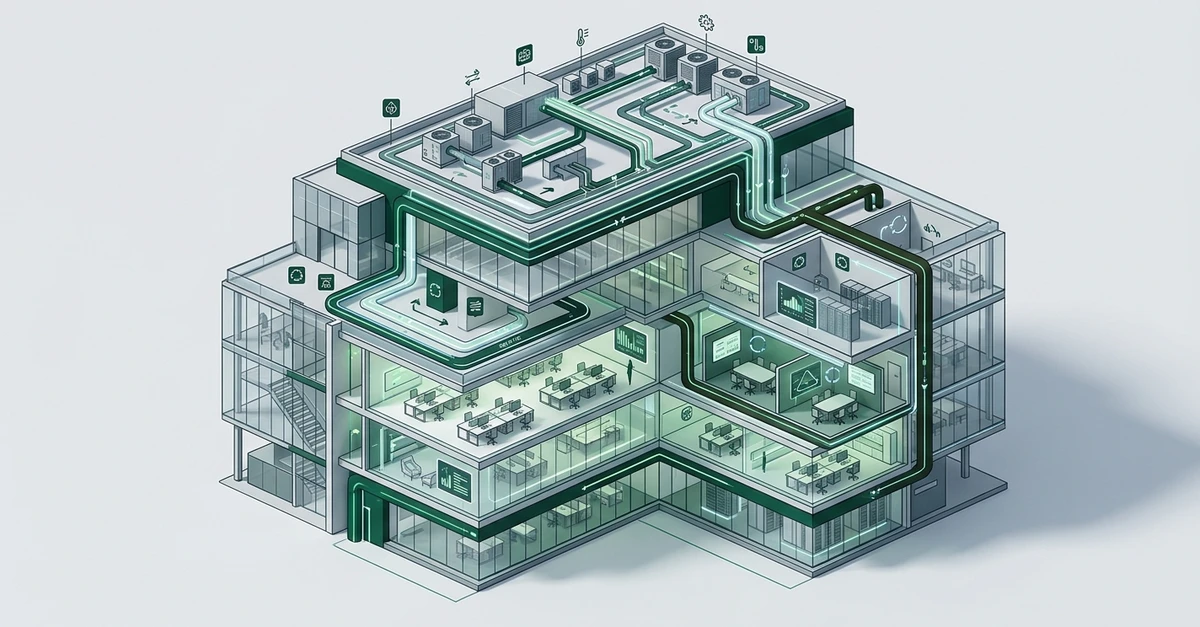
Here is how Daikin VRV (Variable Refrigerant Volume) technology solves multi-zone load variation for complex corporate and industrial facilities:
• Dynamic Inverter Speed Modulation: Instead of brutal power-cycling, the system dynamically adjusts compressor speeds in real time to match exact cooling demands across individual zones.
• Multi-Zone Thermal Balance: Sun-baked glass facades receive maximum refrigerant volume without over-cooling shaded interior workspaces.
• Operational Longevity: Eliminating constant start-stop stress protects critical hardware, keeping equipment performing reliably through the intense summer hustle.
As an authorized Daikin sales and service Dealer Partner backed by over 50 years of industry experience, Coolline designs tailored climate architectures engineered for precision and efficiency. For modern corporate infrastructure, intelligent multi-zone control is not an upgrade—it is a core necessity.
How is your facility managing shifting thermal loads across distinct operational zones this season?